About 136 minutes
Printing and bookbinding for schools — Text and Context
Schools Learning
31,226 recorded words. 8 minutes difference from this book's estimate.
View Gutenberg source #70980
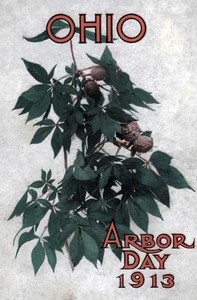
The catalog record for Ohio Arbor Day 1913: Arbor and Bird Day Manual Issued for the Benefit of the Schools of our State — Reading Companion provides practical reading context through 29,253 words, 2 hr 8 min estimated reading time, and 5 detected text sections.
The text analysis averages about 20.7 words per sentence, while the detected sections provide another way to judge how the source is divided.
Project Gutenberg metadata also associates the work with “Arbor Day,” connecting these edition facts with the source record’s subject description.
Explore this collection
These alternatives are selected using recorded categories and estimated reading time.
About 136 minutes
Schools Learning
31,226 recorded words. 8 minutes difference from this book's estimate.
View Gutenberg source #70980About 117 minutes
Schools Learning
26,874 recorded words. 11 minutes difference from this book's estimate.
View Gutenberg source #22581About 114 minutes
Schools Learning
26,057 recorded words. 14 minutes difference from this book's estimate.
View Gutenberg source #52653Search stored excerpts and compare books → Choose by your preferences →
Choices use stored catalog measurements. Estimates vary with reading speed. A shared category is a catalog label, not a claim that two books have the same argument or literary quality.
Search reads excerpt text stored with this catalog and links to its associated Gutenberg record. The connection is stored in the site database; this tool does not recheck that every excerpt is word-for-word identical to that external record. Excerpt search does not cover every chapter and does not verify historical publication dates.
Catalog snapshot checked: 2026-09-26. Coverage: 90 public books, 90 available source excerpts.
Calculated from edition completeness, EPUB availability, text structure and catalogue metadata. Not a user rating.
Total of 100 points, scaled to a 2.5-5.0 range. Editions with an empty description or a missing EPUB file are not scored.
Public-domain source text
The source text is kept in the dedicated reader, separate from this catalogue record and its commentary.
The manual opens with a governor's proclamation declaring April 4, 1913, as Arbor Day, citing a state law requiring schools to teach forestry and bird protection. The catalog subjects—Arbor Day and Bird Day—are fully represented, but the excerpts also reveal a broader scope: the manual includes poems like "The Old Tree" by Richard Nevin Pemberton, a detailed "Horse's Prayer" advocating animal welfare, and precise ornithological notes, such as the redstart's nesting dates and feeding habits. This mix of legal mandate, sentimental verse, and natural history suggests the compiler aimed to engage students through varied genres, not just instruction.
The manual's opening pages reproduce Section 358 of the Ohio General Code, which mandates the state commissioner of common schools to issue a manual each year containing "matters relating to forestry and birds" and relevant laws. Teachers are required to read these laws to students and encourage bird protection. The governor's proclamation reinforces this, urging observance beyond schools into homes. This legal scaffolding positions the manual as a tool of civic education, not merely a nature guide. The excerpts show that the content directly fulfills this mandate, with poems and essays that model reverence for nature and utility—for instance, the redstart is praised both for its beauty and its consumption of insects.
Several poems in the excerpts personify natural elements or animals to convey moral lessons. "The Old Tree" addresses a beech tree as a confidant, recalling carved names and offering benediction. "The Horse's Prayer" is a first-person plea from a horse to its master, requesting kind treatment, proper care, and a humane end. The poem "One, Two, Three!" depicts an old lady and a boy playing, though the excerpt cuts off. These pieces use emotional appeal rather than factual exposition, suggesting the manual aimed to cultivate empathy and stewardship. The compiler, Grace R. Clifton, selected works that align with the day's spirit of appreciation, as stated in the proclamation.
Amid the poetry, the manual includes specific natural history observations. The redstart entry notes precise dates: a pair feeding young on July 13, 1907; a bird incubating eggs on July 5, 1910, which hatched nine days later. It describes the redstart as "the most active of the active warblers" and quantifies its insect consumption as "incredible." This blend of anecdotal and empirical detail reflects the manual's dual purpose: to inspire wonder and to demonstrate the birds' economic value. The text explicitly states that if birds raise two broods, they are "nearly twice as useful." Such language ties directly to the catalog subject of Bird Day, framing protection as both sentimental and practical.
Readers should note that the manual's structure—proclamation, laws, poems, and natural history—mirrors the progressive-era belief that education could shape responsible citizens. The excerpts show a deliberate mix of genres, but without the full text, it is unclear how consistently this blend is maintained. The inclusion of a horse's prayer, for instance, extends beyond Arbor and Bird Day themes, hinting at a broader humane education agenda. Approach the manual as a historical document of early 20th-century schooling, where sentiment and science coexisted in service of civic virtue.
I remember holding that old Ohio manual, its pages full of Arbor Day hymns. There was a tenderness there, a careful tending of young voices. It reminds me of another shelf-sitter, The Child-Voice in Singing Treated from a physiological and a practical standpoint and especially adapted to schools and boy choirs — Reading Notes, which equally understands that growing things — be they trees or children — need gentle, patient guidance.
Save your reaction, strongest insight, and memorable passage.